
Oryx and Crake was written by Margarett Atwood in 2003, just a few years before the beginnings of the EA community. I first read Oryx and Crake shortly before I started engaging with EA ideas, and it wasn’t a coincidence. This book led me to take animal welfare and existential risk much more seriously than I had before.
Since then, I’ve reread Oryx and Crake and the rest of Atwood’s MaddAddam trilogy at least twice. These stories are insightful, fascinating, hard to put down, and strangely beautiful despite the often upsetting content.
Oryx and Crake explores themes of existential risk, animal welfare, trans- and posthumanism, and the psychological effects of widespread poverty and violence. Atwood’s ideological inclinations are somewhat different from most EAs, myself included. Her critiques of global capitalism betray a skepticism that the world is much better for humans than it was in the past.
Nonetheless, Oryx and Crake holds a number of important lessons for aspiring Effective Altruists. I think it’s healthy for EA to engage with “outsider” thinkers who recognize some of the same issues, and part of my motivation for writing this review is to foster such engagement.
Content warning: Oryx and Crake is dark. It’s the kind of creepy dystopianism that sends shivers down your spine. It has significant discussion of existential risk, suffering, death, and violence, including sexual violence, and my review necessarily discusses these things too. Also, there will be plot spoilers.
Synopsis
Jimmy, the protagonist of Oryx and Crake, lives in the aftermath of an existential catastrophe engineered by his best friend, Crake. The book alternates between an account of his postapocalyptic struggle for survival on the outskirts of a ruined city, and flashbacks to the years leading up to the pandemic that ended everything.
In these flashbacks, Jimmy grows up in a wealthy family, the offspring of two brilliant scientists. His is a vulnerable world where biotechnology advances far too quickly for humanity to adapt and it becomes easy to synthesize deadly new pathogens. To protect themselves from corporate assassinations and bioterrorism, the economic elites retreat into biosecure "Compounds" where they can live a close simulation of normal life.
Outside of the Compounds, disease and poverty reign. The nightmares of today's environmentalist left come true. Population growth and environmental destruction cause civilization to blow past all kinds of planetary boundaries, leading to mass starvation. The economy grows, but a rising tide doesn't lift all boats. Instead, it floods the slums while the rich flee for higher ground.
The problems are clear enough for anyone to see, but most of the elites are blinded by a fantasy of technological utopia that never quite seems to materialize. Others distract themselves with drugs and sex and avoid thinking altogether. The few who notice what's happening run off and join various extremist groups that lack any real power to change things. Attempted revolutions are easily mown down by a coalition of corporate paramilitaries that commands a monopoly on firepower.
Crake, Jimmy's genius-psychopath best friend, sees this neofeudal nightmare for what it is and decides to do something about it. Instead of trying to fight the machine, he joins it, getting a prestigious biotech degree and quickly rising to the top of the corporate ladder. Crake thinks critically about the problems facing humanity and concludes that they can only be solved by debugging human nature. To do this, he engineers a new species of human, designed to enjoy a blissful existence free from the confusions and ailments of his own species. These are the “Crakers.” Crake recruits a woman named Oryx to work with the Crakers, teaching them how to survive on their own. Oryx becomes the love interest of both Jimmy and Crake.
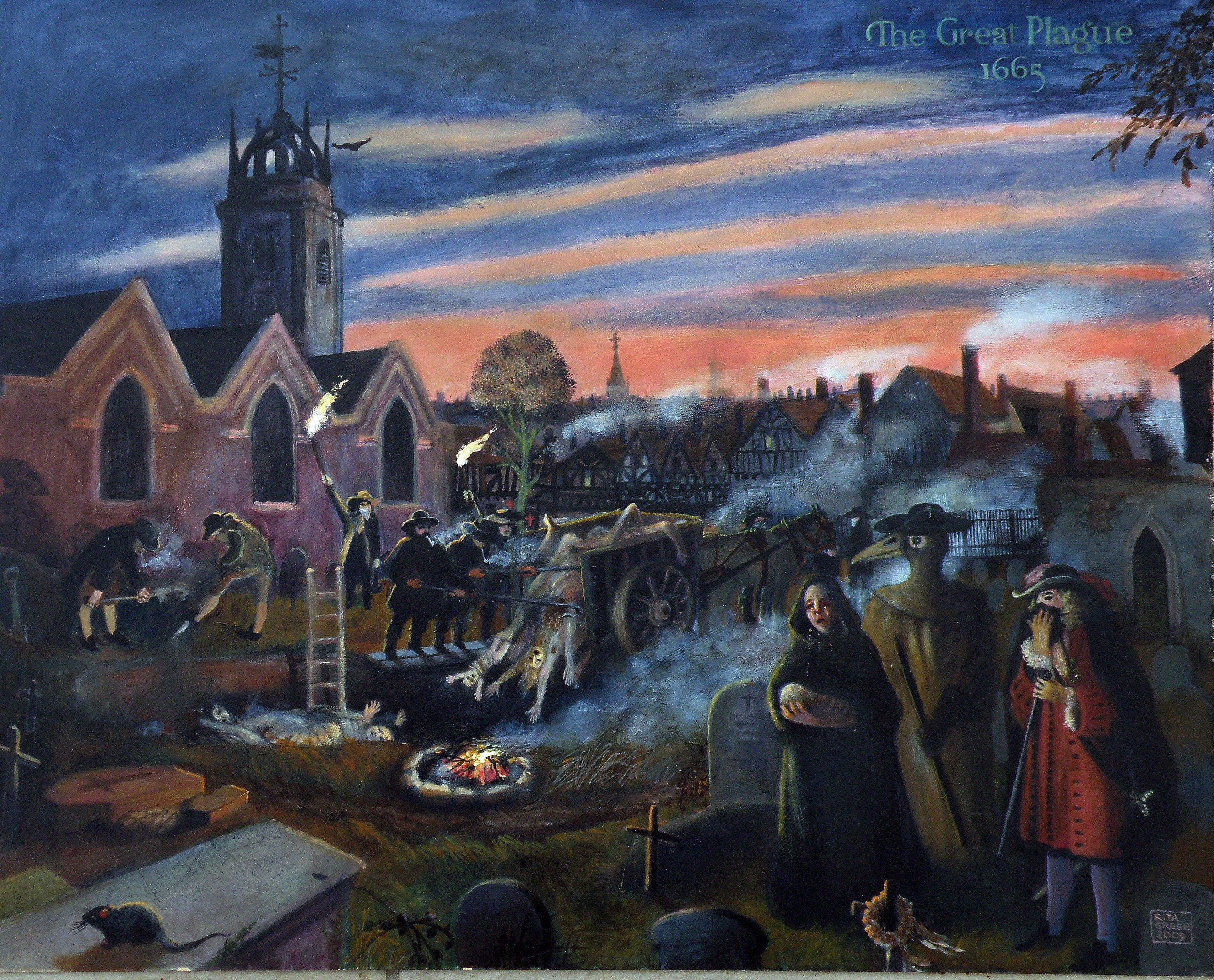
Simultaneously, Crake develops a lethal and highly contagious virus, secretly delivered inside pills that his company distributes worldwide, wiping out the human race. Oryx and Crake die in the tumult of global catastrophe, but they leave Jimmy to look after the Crakers that will inherit the earth.
A Parable for EA
Despite his evil intentions, Crake possesses many of the virtues most prized by EA. His acquaintances perceive him as "intellectually honourable." In conversations with Crake, "events and hypotheses were followed through to their logical conclusions." He is perceptive and observant. While everyone around him chases fantasies and distractions, Crake has the courage to see the dark world. Agentic and pragmatic, he has the very eerie character of an ersatz Effective Altruist.
But instead of trying to improve things at the margin, Crake cooks up a grand theory of human meaning and imposes it on the world by force.
Crake's worldview, as I understand it, boils down to four claims:
- Widespread human misery is the result of misaligned economic incentives.
- These misaligned incentives are the inevitable result of biological urges and competition for resources.
- Human nature makes it impossible for the economic system to align with human flourishing.
- The only way to solve this is to kill all humans and replace ourselves with something better.
Crake's certainty in these claims leads him to……..exactly what you might expect from someone trying to Do The Most Good™!
Crake's willingness to commit genocide in the name of the Greater Good vividly illustrates the pitfalls of implementing hardcore bullet-biting consequentialism on human wetware. His ego leaves no room for moral uncertainty, deontological guardrails, or even epistemic modesty.
A humbler man with Crake's talents might have done a lot of good in the world, but Crake's arrogance and hubris blind him to his own limitations.
An Ineffective Apocalypse
The irony is that Crake’s quasi-human creations, the “Crakers” with which he tries to replace the human race, are not really what he envisioned. As Jimmy shepherds a growing tribe of Crakers through their newly emptied world, they develop a strange and beautiful culture that violates many of Crake's ideals.
The most obvious example of this is the Crakers' religiosity:
Crake thought he'd done away with all that, eliminated what he called the G-spot in the brain. God is a cluster of neurons, he'd maintained.
Despite Crake's best efforts, the Crakers develop a burning desire for answers to all the existential questions over which humans perseverate. Who are they? Where did they come from? Who made them?
Jimmy doesn't want to tell them their creator was a mass murderer, so he invents a creation myth involving Oryx and Crake. The Crakers end up worshiping Oryx and Crake as deities, believing that they went to live in the sky after creating the Crakers. This is something Crake never would have wanted and explicitly tried to prevent.
To put this differently: Crake tries to align general intelligences with his own value system, and fails. The Crakers are almost-aligned from Crake's standpoint. He succeeds at making their speech hyperliteral, but he fails to stop them from making art or music. He succeeds at removing humor from their brains, but not religion or dreams. They end up in an uncanny valley between Crake’s ideal and the human source code that he wanted to overwrite.
What is "human"?
Are the Crakers human?
It’s not clear. They certainly look and talk like humans, but they live off of tree leaves and don’t make jokes. They are designed to have the features and musculature of supermodels, and they die of old age at 30.
The Crakers are one of several lifeforms that blur the boundaries between human and nonhuman in Oryx and Crake. Another is the “pigoons,” giant mutant pigs engineered to grow human organs for transplantation. In a breakthrough, scientists learn to grow human brain tissue in the pigoons, creating the possibility that they have human inner lives while enjoying all the rights and privileges of farmed animals.
Through the pigoons, Atwood asks: What happens when you replace one neuron in a pig’s brain with a human neuron? Is it still a pig? What about one thousand neurons? One million? The entire neocortex?
The answer, of course, is that it doesn’t matter. The Ship of Theseus is just another boat, a human just another sentient being. And if you’re claiming any semblance of consistency, you don’t get to choose which sentient beings are in your moral circle.
Three thousand years of western philosophy have conditioned us to see humans as being somehow metaphysically distinct from our animal cousins. But if humans are ontologically special, we should always be able to say whether something is human or nonhuman. The Crakers and pigoons present edge cases that don’t fall neatly into either category.
Atwood advocates a Copernican revolution in how we conceptualize our place in the animal kingdom. Whereas many western philosophers have emphasized the distinctions between us and our primate ancestors, Atwood believes we are only an upgraded version of them. In this sense, Crake understands human nature better than anyone else in the book:
Monkey brains, had been Crake’s opinion. Monkey paws, monkey curiosity, the desire to take apart, turn inside out, smell, fondle, measure, improve, trash, discard – all hooked up to monkey brains, an advanced model of monkey brains but monkey brains all the same.
But wait. Crake is a mass murderer. Why should we care what he thinks?
I believe we are actually supposed to take Crake’s empirical beliefs about his world very seriously. He accurately diagnoses the world’s problems, he just responds to them the wrong way. It’s his morals that are problematic, not his epistemics.
Atwood herself agrees with Crake’s analysis here. Humans aren’t special; the world doesn’t end when humans die out. Indeed, half the book is dedicated to describing what happens after civilization collapses. Spoiler alert: the earth keeps on spinning.
The humans who do survive Crake’s apocalypse experience a devastating role reversal with respect to the rest of the animal kingdom. Jimmy ends up sleeping in trees, where roaming packs of carnivorous feral pigoons can’t get him. Multiple chapters are dedicated to a scene in which Jimmy is hunted by pigoons. Jimmy's porcine cousins display near-human intelligence and social coordination, deploying a variety of clever strategies to trick him into coming within their reach. As Jimmy reflects, “if they’d had fingers they’d have ruled the world.”
All of this serves to underscore the atrocity that was committed when pigoons were under the human yoke. The pigoons, with their twisted hybrid brains, deserve moral consideration comparable to what we would afford a human being. Instead, they are confined on factory farms and disassembled for spare parts. Even as they hunt Jimmy, his description of how they were treated creates a sense of justice in their liberation.
Soylent Green is People!
And the pigoons aren’t only used for organ transplantation. Rumor has it they sometimes end up in meat products sold for human consumption. Genuine meat is a scarce luxury in Oryx and Crake, so there’s a huge profit incentive for companies to sell any leftover animal flesh at their disposal. And if pigoons blur the line between human and nonhuman, their consumption blurs the line between carnivory and cannibalism. The corporations claim their sausages don’t include any pigoon flesh, but Atwood strongly implies that they’re lying. Soylent Green is people.
When we talk about factory farming in real life, it’s easy to think of it as a distant problem that doesn’t really concern us, something we might try to mitigate out of the goodness of our hearts, but not a problem that carries any real urgency.
The pigoons challenge this perception. Through them, Atwood shows that it is all too easy for the normalized abuse of one class of beings (chickens and pigs) to wind up justifying abuses that hit much closer to home (pig-human hybrids). In a desperate, lawless dystopia ruled only by profit incentives, factory farming is just the first step towards greater evils. Injustice anywhere is a threat to justice everywhere.
Indeed, even as pigs are endowed with human minds, humans are increasingly treated like animals. In one of the more disturbing parts of the book, Atwood describes starving families in the global south selling their children into sexual slavery. Oryx was one of these children. In an account of Oryx's childhood, Atwood writes:
In the morning they were all herded around to the back of the building where there was an open latrine. A pig on the other side of it watched them while they squatted.
Monsters and Madmen
From a God’s eye view, Atwood’s dystopia looks like an ouroboros: a hungry serpent that, having run out of food for survival, wraps around in desperation to swallow its own tail.
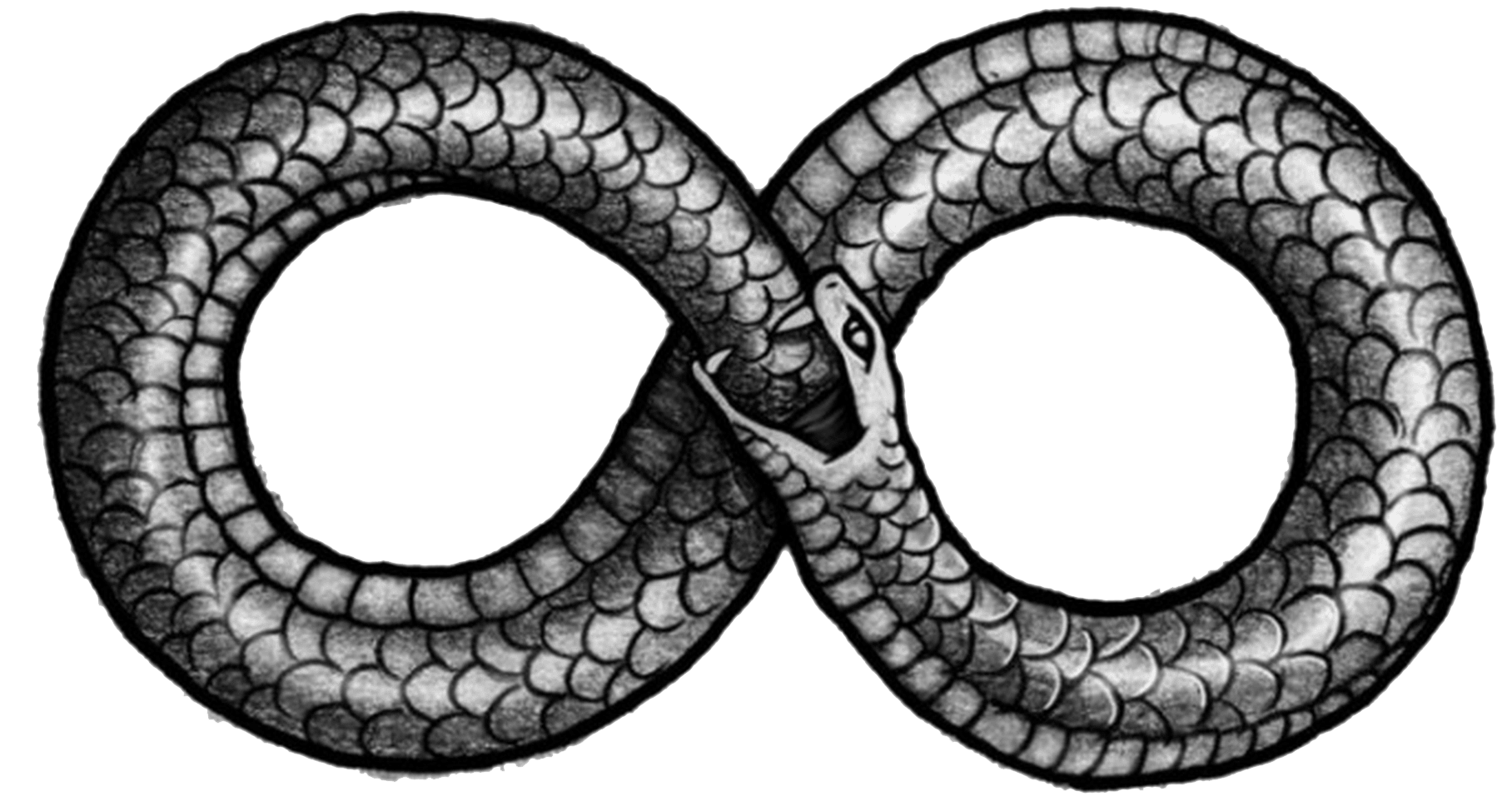
Monsters like the ouroboros are an important theme throughout Oryx and Crake. The pigoons are monsters. The posthuman Crakers are monsters (or are they?). Crake himself is a kind of monster, a latter-day Victor Frankenstein. In a conversation with some borderline-impoverished artists, Jimmy is told the following:
Human society, they claimed, was a sort of monster, its main by-products being corpses and rubble. It never learned, it made the same cretinous mistakes over and over, trading short-term gain for long-term pain. It was like a giant slug eating its way relentlessly through all the other bioforms on the planet, grinding up life on earth and shitting it out the backside in the form of pieces of manufactured and soon-to-be-obsolete plastic junk.
"Like your computers?" murmured Jimmy. "The ones you do your art on?"
Soon, said the artists, ignoring him, there would be nothing left but a series of long subterranean tubes covering the surface of the planet. The air and light inside them would be artificial, the ozone and oxygen layers of Planet Earth having been totally destroyed. People would creep along through this tubing, single file, stark naked, their only view the asshole of the one before them in the line, their urine and excrement flowing down through vents in the floor, until they were randomly selected by a digitalized mechanism, at which point they would be sucked into a side tunnel, ground up, and fed to the others through a series of nipple-shaped appendages on the inside of the tube. The system would be self-sustaining and perpetual, and would serve everybody right.
The story is satirical, but it reflects the artists’ understanding of their own civilization: a cruel monstrosity, cleverly designed to maximize production at the expense of human welfare. Overpopulation and resource depletion lead to food scarcity, which leads to cannibalism.
No individual member of Crake's world wants this state of affairs. When Jimmy's father, a brilliant scientist responsible for the pigoon project, is accused of abandoning his formerly noble ideals, he responds:
I've still got them. I just can't afford them.
For me, this is what makes Atwood’s dystopia so compelling: it persists despite everyone wishing things were different.
This begs an important question, asked by Scott Alexander in his Meditations on Moloch:
...if everyone hates the current system, who perpetuates it?
Scott’s answer: a Lovecraftian monster he christens “Moloch.” Moloch is not a literal monster, but a metaphor for the corrosive, agent-like, emergent behavior of social systems that we aren’t really in control of. Of the Moloch metaphor, Scott says:
It’s powerful not because it’s correct – nobody literally thinks an ancient Carthaginian demon causes everything – but because thinking of the system as an agent throws into relief the degree to which the system isn’t an agent.
Bostrom makes an offhanded reference of the possibility of a dictatorless dystopia, one that every single citizen including the leadership hates but which nevertheless endures unconquered.
Scott mentions Malthusian traps as an example of this phenomenon:
Suppose you are one of the first rats introduced onto a pristine island. It is full of yummy plants and you live an idyllic life lounging about, eating, and composing great works of art (you’re one of those rats from The Rats of NIMH.)
You live a long life, mate, and have a dozen children. All of them have a dozen children, and so on. In a couple generations, the island has ten thousand rats and has reached its carrying capacity. Now there’s not enough food and space to go around, and a certain percent of each new generation dies in order to keep the population steady at ten thousand.
A certain sect of rats abandons art in order to devote more of their time to scrounging for survival. Each generation, a bit less of this sect dies than members of the mainstream, until after a while, no rat composes any art at all, and any sect of rats who try to bring it back will go extinct within a few generations.
In Oryx and Crake, people are the rats, which is why the artists Jimmy talks to are poor. But Oryx and Crake introduces a survival strategy far creepier than giving up on art: eating human flesh, grown in pigoons, as a source of nutrition.
Never mind that population growth is unlikely to cause widespread famine in real life. The point is that our failures to solve collective action problems yield outcomes that nobody wants.
Moloch and Crake
Overpopulation isn’t the only unsolved coordination problem in Oryx and Crake. Crake’s society also fails to effectively regulate biotechnology.
Unfortunately, when an entire civilization can’t afford to regulate biotechnology, it becomes dangerously easy to cook up deadly new viruses.
Crake understands the unilateralist's curse: some fanatic is bound to release an extinction-level pandemic pathogen sooner or later, and whoever controls whatever happens after the apocalypse controls the future.
Crake wants to control the future; he wants power. And he deduces that the only way for him to get the power he wants is to cause the apocalypse himself and choose who will inherit the earth.
Note that this is precisely the opposite of what Moloch “wants,” if by “Moloch” we mean the economic system’s agentlike drive towards ever-greater production. Moloch wants more roads, more buildings, more corporations, more GDP, more guns, more factory farming, more child pornography, more slavery.
Moloch does not want the end of the world. Moloch simply wants More.
And Moloch is willing to sacrifice anything in order to get it. Like a paperclip maximizer, Moloch sets the “More” parameter to infinity and everything else to zero. Moloch does not hate you, nor does he love you, but he can use your resources for something else.
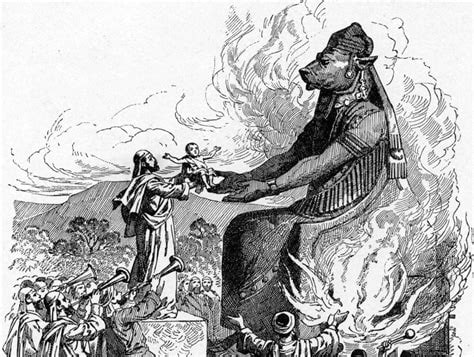
But Moloch can’t get More by magic. He needs humans to do his dirty work, and not just any humans. Well-rounded altruists won’t be helpful. To maximize his objective function, Moloch wants technically brilliant task monkeys that obey Moloch’s rules, and have never heard of art, philosophy, spirituality, emotion, or passion. Moloch wants robots who will simply build, build, build. Moloch wants intelligence without wisdom, productivity without purpose.
Crake, then, is Moloch’s greatest creation, and also Moloch’s undoing. Crake is narrowly educated and excels at what he does. Like Moloch, Crake believes neither in God nor Nature, and views aesthetics with contempt. He thinks humor and metaphor are mere distractions, inefficiencies in communication, obstructions to information flow. To Crake, concepts like “human rights” and “democracy” are childish fables. But instead of building More, Crake murders the entire human race, destroying Moloch’s only means of getting what he wants.
Why does he do this? Why would Crake overthrow the system that created him? If Moloch has the power of an entire economic system, then why does Moloch fail at conditioning Crake to serve him faithfully?
Because safely aligning general intelligences is hard.
In order to build More, Moloch needs genius-level intelligences to act on his behalf. But he needs these intelligences to have no guiding philosophy, or else to be guided by some kind of Landian accelerationism. Indeed, Moloch seems to almost succeed at this: Crake professes not to care about mushy stuff like aesthetics or spirituality, and tries to prevent his “Crakers” from caring about these things either. Crake thinks he can boil everything down to empirically falsifiable truth claims, with no need for philosophy.
But Crake is lying to himself. Whether or not he admits it, his entire justification for his genocide is grounded in philosophy, not science.
Of course, his philosophy is a demented mishmash of evo-psych hypothesizing and some dimwitted cousin of utilitarianism. But it's philosophy nonetheless, and it leads Crake to do things that Moloch would never want. Moloch fails to stop his acolyte from philosophizing, and his acolyte revolts violently against the attempt.
Scott Alexander writes that "Only another god can kill Moloch." Perhaps the Crakers are right to worship Crake as a god.
Crake is a kind of übermensch: powerful, amoral, genius, ruthless, protean, sophisticated, mercurial, cruel. With an ego the size of a planet, Crake rebels against the gods who would control him. Moloch wants a task monkey, but instead he gets a crazed power-seeking psychopathic mass-murder hellbent on killing everyone in an attempt to seize control of the long-run future.
Humans seeking to control general intelligences, be warned.
Value Lock-in?
Crake’s explicit goal is to engineer a long-term future that reflects his personal philosophy. He deliberately engineers the Crakers to be able to digest tree leaves so they have no need for agriculture or industrialization. He believes that the few remaining humans will be unable to rebuild civilization due to knowledge loss and a lack of available near-surface ores. Since the Crakers have a sped-up maturation and reproduction cycle, their population will grow quickly, allowing them to outcompete homo sapiens. Crake's vision controls the future.
…..Except it doesn't. Crake only created a few dozen Crakers, and they could easily be taken out by a natural disaster or disease. And in the long run, natural selection and genetic drift will inevitably alter their bodies and minds in ways Crake can’t anticipate or control. Crake may have killed Moloch, but he didn't kill Nature. There will always be forces that are beyond human control. From a cosmic perspective, his feeble attempt to impose his will on the universe is no less transitory than the civilization he destroyed.
Moreover, he fails to remove all kinds of things he doesn’t like from the Crakers’ minds, such as religiosity.
The moral here is clear: no matter how hard you try to leave your fingerprints on the future, you’ll almost certainly fail, because you are not a god. The world is far more complicated and mysterious than you can comprehend.
The Man of Action and the Man of Words
Crake can be understood as a personification of the broken civilization that created him. Atwood’s economic system values technical brilliance above all else, so the highest-status members of society are cartoonishly one-dimensional science whizzes.
Generalists and humanities majors like Jimmy are funneled into meaningless advertising roles, and policy decisions end up being made by code monkeys rather than philosopher kings. But even the code monkeys have no real choice: everyone is constrained by a toxic set of incentives that lead society to careen inevitably towards ever-greater desperation.
A hero might look at this state of affairs and orchestrate some kind of revolution. But the broken socioeconomic system of Oryx and Crake does not breed heroes. Instead, it breeds brilliant monsters, sophisticated automata that follow whatever set of instructions is set out for them.
Both Crake and Jimmy defy this incentive structure, in different ways. Crake gets a technical education and a job in corporate R&D, but he secretly plans a murderous revolt. Jimmy doesn’t try to force some personal philosophy on the world, but he doesn’t follow the conventional route through STEM education either. He couldn’t if he wanted to; he sucks at math.
Neither of them are heroes, though. Crake is a villain, and Jimmy is lazy and pathetic.
Jimmy is the Hamlet to Crake’s Fortinbras, a Man of Words to Crake’s Man of Action. Jimmy is a depressed poet, a reader and writer in a world that only values coders and engineers. He fails to get into any top technical universities, and ends up in a humanities college with a reputation for mediocrity. Whereas Crake uses technical genius to seek power above all else, Jimmy is bad at math and can barely be bothered to roll out of bed in the morning, much less try to influence the world.
Jimmy is actually brilliant, but his generalist inclinations are useless to an economy that prizes technical specialization. He winds up making a very modest living in the advertising wing of a mid-sized corporation, selling pharmaceutical snake oil to the desperate and needy.
Throughout the book, Jimmy often considers pushing back against Crake’s increasingly worrying philosophy, but unlike Crake, Jimmy lacks the courage of his convictions. Instead of trying to help people or change Crake’s mind, Jimmy wastes away in cynicism, sloth and debauchery.
Jimmy should be the perfect antidote to Crake. He has a broad liberal arts education that could enable him to correct Crake's philosophical errors. He also has a compassion for others that Crake fundamentally lacks, a compassion that extends even to animals. Where Crake sees an opportunity to wield power, Jimmy sees suffering people to be helped. The problem is, Jimmy can’t be bothered to help them.
This isn’t because Jimmy is stupid or incompetent. It’s because he refuses to see the dark world that Crake sees, going out of his way to avoid thinking about the brutal dystopia that his world has become.
Jimmy is well aware of the world’s suffering. He's in love with Oryx, a woman born to a destitute family and sold to human traffickers. But Jimmy refuses to think critically about why such horrors exist. When Oryx tells him about her childhood as a sexual slave, Jimmy often expresses intense anger at the individuals who abused her, saying he’d like to “track down and personally injure anyone who had ever done harm to her."
But his anger is a mask for the guilt he feels over having watched child pornography as a teenager, including a video that he believes included Oryx. People like Jimmy are abusers because they provide a profit incentive for the abuse. Jimmy doesn’t want to notice this, so he aims his anger at the people who directly commit the violence, rather than the system that incentivizes them to do so.
This is why Oryx sometimes looks at Jimmy with “amused contempt.” He’s immature. When he tells Crake how angry he is about Oryx’s childhood, Crake tells him to “grow up.” Jimmy wants to think of himself as a good person, but isn’t willing to face up to the suffering he personally causes. He doesn’t want to see that the problems are systemic, and that he is part of the system.
Crake entertains no such illusions. Crake sees the system for what it is, and has a plan to change it.
Crake doesn’t tell Jimmy his plan, but Jimmy has suspicions. In the months leading up to Crake’s pandemic, Jimmy sees plenty of hints that his friend is up to no good. But Jimmy ignores the hints, distracted by romantic fantasies and his own depression.
In other words, Jimmy is too much of a coward to gaze into the abyss. He chooses not to see that he is one of Oryx’s abusers, or that his meat consumption causes the pigoon abuse about which he is so squeamish, or that Crake is clearly planning something awful. Meanwhile, Crake stares a little too hard into the abyss and is engulfed by it, giving up his humanity in the pursuit of power.
Jimmy’s redeeming quality is his compassion, but his compassion is impotent because he lacks the willpower to act on it. Jimmy may not be a literal rapist, animal abuser or mass murderer, but he’s complicit in all of these things. At the end of the day, he’s no better than Crake.
The lesson for EA: don’t be like either of them. Don’t pretend you know everything and can build a perfect utopia if only you are given the reins of power. Don’t leave your fingerprints on the future. At the same time, find the courage see the dark world, and work hard to make it a little less dark. Combine Jimmy’s compassion with Crake’s willpower. Avoid Jimmy’s sloth and Crake’s hubris. It's a difficult challenge, but one we must meet.
A few quibbles
As you may be able to tell, I like this book. I do think it has a few weaknesses, though.
- Despite its strong animal welfare theme, Oryx and Crake sometimes risks contributing to perceptions that soy and other vegan protein sources are weird and unnatural.
Atwood gives funny names to the various faux animal products in Oryx and Crake, from “SoyOBoy burgers” to “CrustaeSoy” to “SoYummie Ice Cream.” Throughout the book, people speak with nostalgia about conventional hot dogs and burgers. Atwood uses ersatz meat to illustrate the severity of food scarcity in her dystopia, but there’s a risk that alternative proteins end up seeming dystopian in themselves. “Bernice the vegan,” Jimmy’s onetime animal rights activist roommate, is the subject of ridicule rather than admiration.
It’s not clear to me how seriously we’re supposed to take this ridicule. The book is narrated from Jimmy’s perspective, and we certainly aren’t supposed to trust his judgment on everything. Atwood herself is an ethical pescatarian,[1] and her book clearly advocates for treating animals with respect. Insofar as her books contribute to negative perceptions of soy and other vegan products, the effect is probably unintended.
But it’s an unfortunate effect nonetheless. Soy is good for your health, an excellent source of protein, and environmentally friendly. Alternative proteins may be the key to appeasing people’s meat addictions without abusing animals – a huge gain for the world.
- Oryx and Crake is also built on unrealistic assumptions about economic and demographic trends. The global population should stabilize this century, and predictions of mass starvation have repeatedly failed to come to pass. We have a long way to go to end world hunger, but the trend lines are pointed in the right direction.
In general, I am not as persuaded by environmental alarmism as Atwood seems to be. Climate change is an important problem and we should take significant steps to mitigate it, but it’s not a major existential risk.
There are lots of great lessons to be learned from Oryx and Crake, but “we are all going to starve due to overpopulation and global warming” isn’t one of them. Unfortunately, I suspect this is what some readers will think after reading the book. There's nothing wrong with building unrealistic assumptions into a work of fiction, but for the purposes of this review I think it's important to note what's realistic and what's not.
Quibbles notwithstanding, I highly recommend Oryx and Crake. It's compelling, provocative, gripping, and a great way to explore a variety of themes that are pretty central to EA.